
Homeowner
Resources
Whether you have just purchased your shoreline home (congratulations!) or you’ve been enjoying the salt spray for years, there is always more to learn.
We’ll be updating this page to include information and resources about some of the most common topics that landowners ask us about.
We hope to address topics such as: what a new homeowner needs to know about living on the shoreline; how to stabilize your banks with native plants; how more appropriate drainage can reduce your risk; what to expect from sea level rise; and how wave energy can vary depending on your bank height and location.
Stay tuned as we make updates and keep adding content!
Jump To:







What’s Growing On?
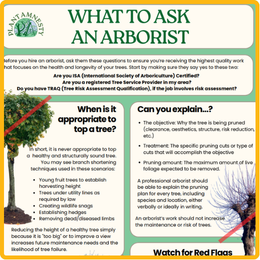
Adding or maintaining native plants is almost always a good idea. If you want to stabilize your shoreline, or you want to enjoy more birds and wildlife, get to know your native plants! Explore below to discover: how plants protect properties from erosion; common invasive plants; and how to select the best native plants for your site.

Native plants stabilize banks with root systems that hold soil in place, absorb water, and slow down runoff, all of which help to prevent erosion. When the large roots of trees, the finer roots of shrubs, and the small roots of ground-cover all work together, a powerful matrix is created to hold the soil.
Looking to purchase Native Plants? Check out your local nursery or visit this page in the fall to sign up for King Conservation District’s Native Plant Sale.


In order to gain the benefits of native plants, you often have to make room by taking out invasive weeds. Weeds can crowd out native plants. They steal the sun and space, without providing benefits to soil stability and wildlife. They can also hide small problems, which, if left unattended, can lead to great big ones.
For small patches, the removal of weeds will allow natives to move in. For larger areas, you’ll want to have a replacement plan before you get started. And for areas that are unstable or subject to serious erosion, you might want to take invasive plant removal one small area at a time.


The creation of a natural landscape with thriving native plants begins with matching the needs of each plant with the right conditions on your property. First, spend some time learning about your property – take note of where it is sunny, and where it is shady. Figure out the wetter places, and where it is dry.
Once you have a sense of the site, it’s time to select some plants! Think about the height they will be when full-grown. You might want to plant larger trees to the side, in order to create a natural frame for your view. Research the variety of plant species that match your site conditions – if you stay local, you’re likely to find plants that are perfectly suited to your property!
Consult some of the below resources for information on plants, as well as your local nursery. And enjoy the process!


Bluff Stability and Drainage
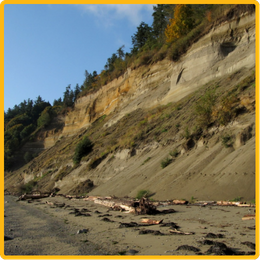
Shoreline erosion is natural around Puget Sound. Without it, we wouldn’t have sand on our beaches – sand that supports the shorebirds, crabs, and fish that make Puget Sound vibrant.
However, erosion can be a worry for homeowners. While natural erosion is generally slow – a few inches a year, or a small landslide every decade or so – seeing those slides near your home can make you want to ensure that your home is safe.
Sometimes, that worry is warranted – it turns out that many of the landslides that impact property owners are actually influenced and hastened by homeowner actions. So while a homeowner can’t ever completely stop erosion, you can learn how to ensure how to keep any potential erosion to those slow, natural, levels.

The short videos and resources below can help you understand:
- Why natural erosion is important for the health and beauty of Puget Sound
- What homeowner actions can make slopes even more unstable
- How to spot slope instability near your home
- Most importantly, what you can do to make sure you are not speeding up the course of nature.
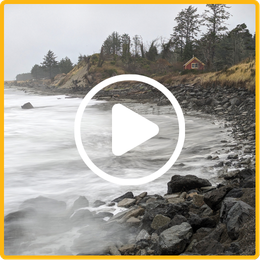

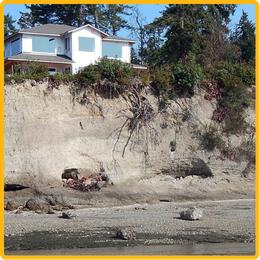
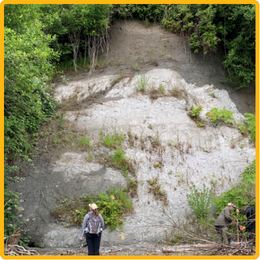
Much of our Puget Sound shoreline is characterized by high bluffs and steep slopes. Over time, natural shoreline erosion can occasionally lead to landslides or small slope failures, especially during periods of heavy rain.
Homeowner actions, however, can sometimes increase those risks. Knowing the warning signs of a weak slope—such as cracks in the ground, leaning trees, or new areas of soil movement—can help you spot potential landslide risks early and take steps to reduce hazards around your property
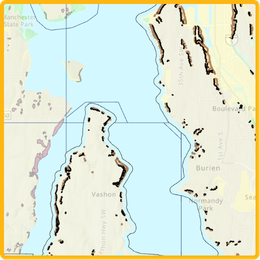

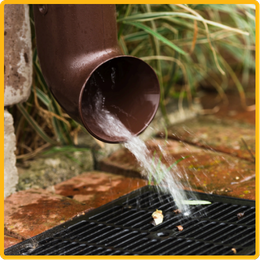
Rainy winters are a fact of life here in Puget Sound. Excess water is one of the factors that can make slopes less stable, so making sure that you are managing your stormwater well is an important part of living on the shoreline.

In the Puget Sound, most shoreline development or redevelopment is regulated. They are considered Shorelines of the State under the 1971 Shoreline Management Act. That law acknowledged that the shorelines “are among the most valuable and fragile of its natural resources” and the piecemeal loss of shorelines and their resources could harm all Washingtonians. It requires a coordinated approach to shoreline development that balances protecting resources and private property rights.
What does it mean, practically? It means that if you are doing work within 200 feet of the water, you may need a permit. Local government has the primary responsibility for administering shoreline programs, so start with your local city or county to see what is required. It should be noted that any work at or very near the beach (like a dock or bulkhead) will also likely need a floodplain development permit from your local government, a permit from Washington Department of Fish and Wildlife called a ‘Hydraulic Project Approval’ or HPA, and may require a permit from the United States Army Corps of Engineers.

Generally, removing invasive plants and replacing them with native plants is recommended – and doesn’t require a permit. However, any construction – building terraces, or putting in a stairway or landing area, for instance – likely will need a permit. Removing trees tends to need a permit or an exemption letter from your local government.